Choose where a handover goes
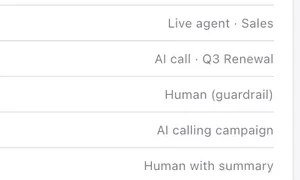
A live agent, an AI call, a human with a summary, or a guardrail. Picking the right one is the difference between a rescue and a second failure.
Every handover condition names where the conversation goes, and the four destinations behave very differently. Choosing badly turns a good handover into a second disappointment — which customers experience as being passed around.
Before you start
- A bot with at least one handover condition.
- An honest answer for each destination about who receives it and whether they are there.
Reference
Live agent, when the customer is waiting now
They are in the conversation, they asked for a person, and they expect one. This puts a named team on it immediately with the full history.
Only use it when somebody is genuinely there. A live-agent handover at 11pm on a channel nobody monitors is worse than the bot saying "we will come back to you in the morning".
AI call, when the next step is a conversation
A chat bot that has qualified a lead can hand to an AI calling campaign. The chat captured the interest; a call qualifies properly. This is often faster than waiting for a human to become free, and it happens at 2am.
Human with a summary, when it is not urgent
The person picking it up later gets the context without reading forty messages. Right for anything that needs judgement but not immediacy.
Guardrail, for the conversations you must not get wrong
Refunds, legal questions, enterprise pricing. The destination is a person, and the point of naming it as a guardrail is that the bot stops the moment the topic arises rather than attempting an answer first.
Check somebody is watching each destination
Walk your conditions and ask, for each, who receives it and whether they are there. This is a five-minute audit that catches most handover failures.
Tell the customer what is happening
Instruct the bot to say it is fetching somebody, and roughly when. Silence after a handover reads as being ignored, even when everything worked.
Put it to use
For each destination in your bot, ask the person on the receiving end whether they have actually seen one. If they have not, either the condition never fires or it is landing somewhere else.
The parts people get wrong
- Because a handover assigns the conversation, it is also what makes it visible to that agent — they cannot see it before, since agents only see what is assigned to them.
- An AI call destination needs a campaign that exists and a line with capacity. Check both.
The ones people actually ask
When should a handover go to a live agent?
Only when somebody is genuinely there. A live-agent handover at 11pm on a channel nobody monitors is worse than the bot saying it will come back in the morning, because the customer has been promised a person who does not exist.
What is the AI call destination for?
When the next step is a conversation rather than a reply. A chat bot that has qualified a lead can hand to an AI calling campaign — often faster than waiting for a human to become free, and it happens at 2am.
What is a guardrail?
A destination for the conversations you must not get wrong — refunds, legal questions, enterprise pricing. The point of naming it as a guardrail is that the bot stops the moment the topic arises rather than attempting an answer first.