
Take inbound calls straight off your gateway
Give the IP or domain of your gateway and the protocol. Incoming calls hit your flow or your AI agent.
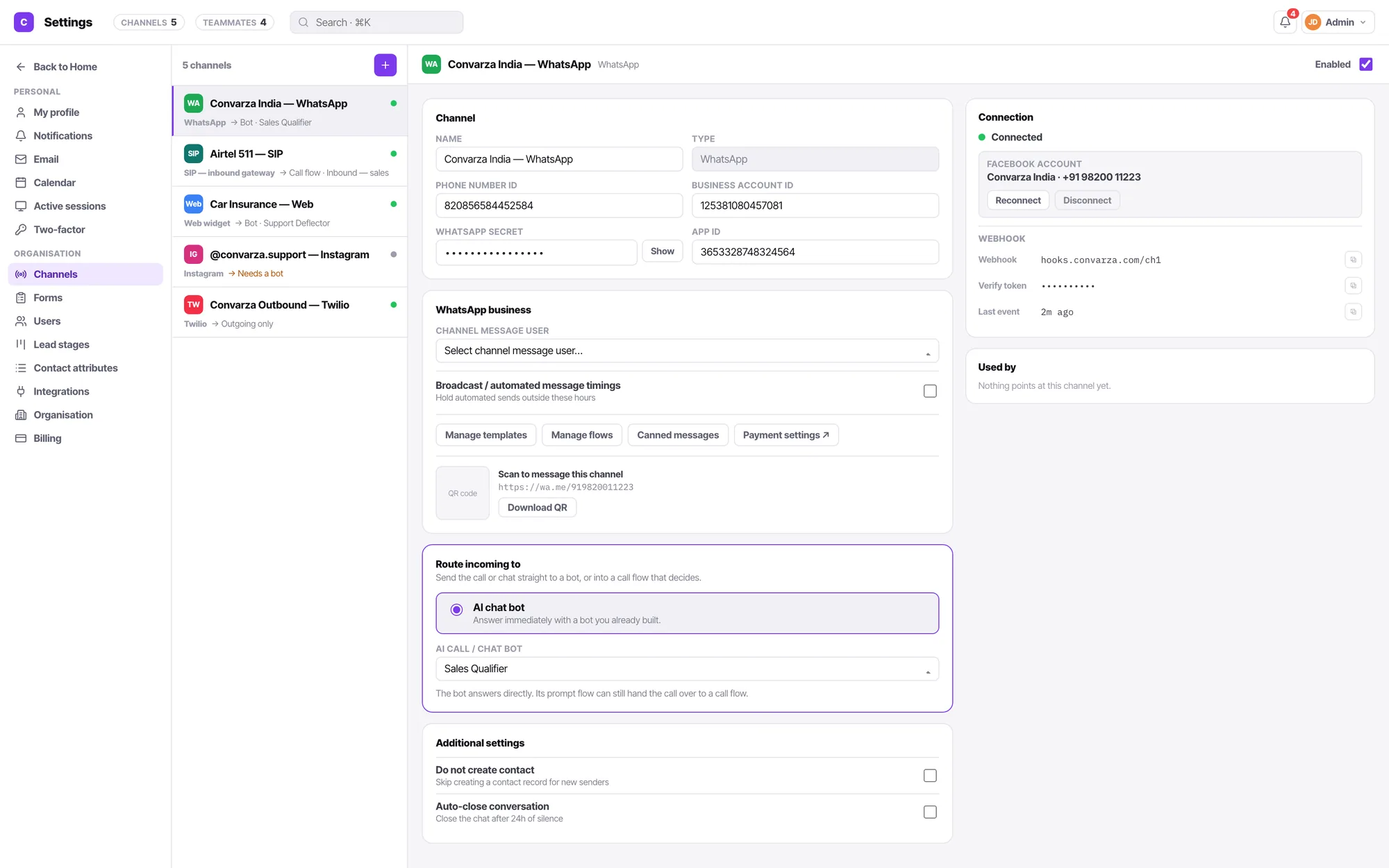
Connecting SIP — inbound gateway
Adding a channel starts from an icon grid of all thirteen types, not a form. Picking one creates the channel and opens its config pane immediately — there is no name-entry modal.
Give the gateway address
The IP or domain of your server or gateway.
Pick the protocol
A dropdown, not a text box.
Route it
An AI voice agent answers immediately, or a call flow decides.
Not every channel needs every control
Calling channels get resource, region, direction and advanced settings. Chat channels do not, because a web widget has no trunk. The two never borrow each other’s controls.
- Trunk status with refresh
- Gateway config readout — server IP, port, username, auth secret
- Restricted call timings
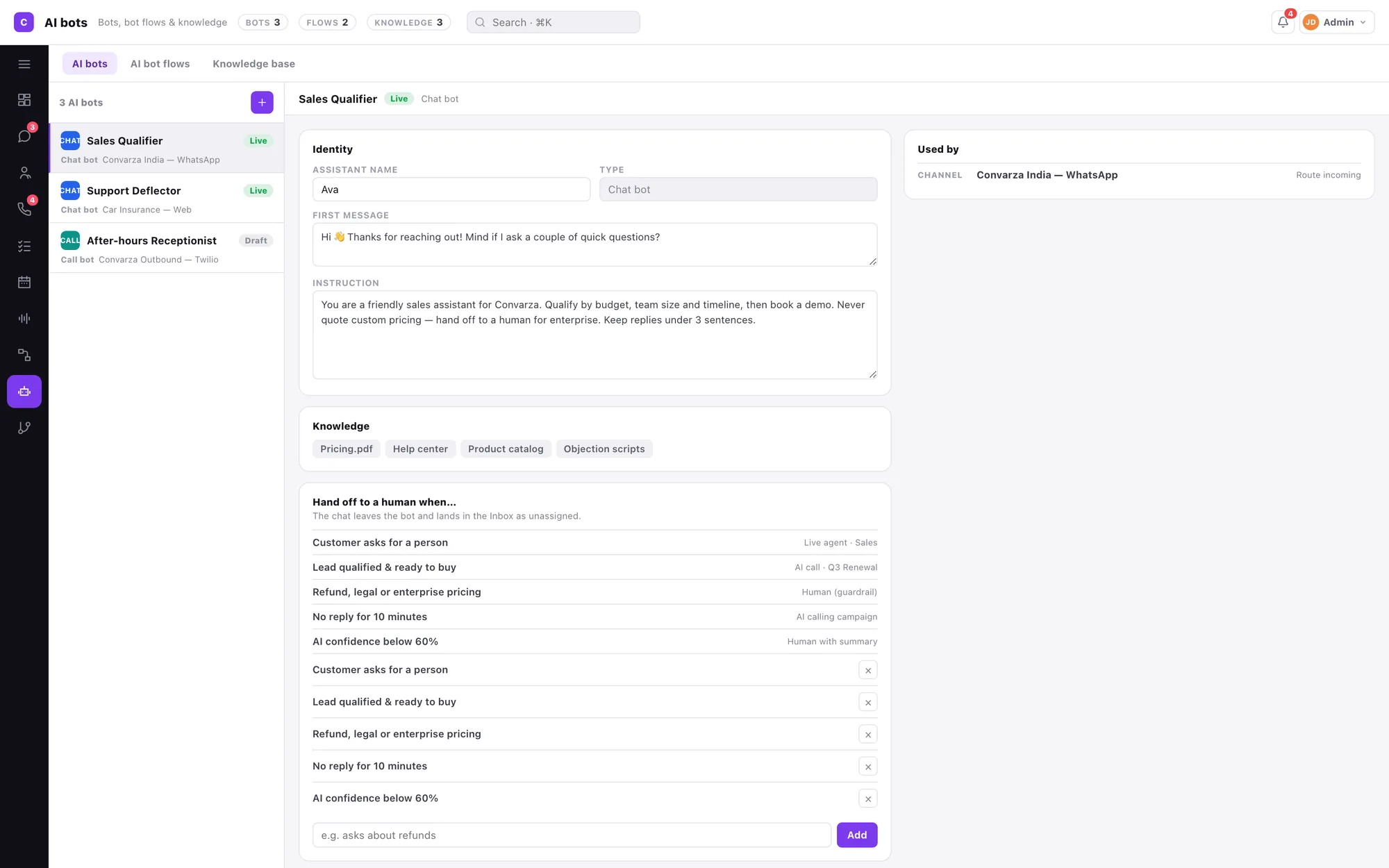
A channel answers with exactly one thing
An AI bot, or a call flow. Never both, never neither. It is the only reason you can ever say for certain what picked up.
SIP inbound FAQ
Can I dial out on an inbound gateway?
No, and campaigns will not offer it. An inbound-only gateway shows no outbound options rather than failing later.
What answers the call?
Whatever the channel points at — one AI voice agent, or one call flow. Never both, never neither.
How many channels do I get?
Three on Starter, four on Growth, seven on Scale and twelve on Enterprise — of any type. Compare the plans.
Who can connect or disconnect a channel?
An admin. Connecting a line means credentials, a carrier account and a bill. A manager keeps everything operational — routing, calling hours, additional settings, enable and disable, and the health readout — but the credential fields and the connected-account row are admin-only, and the product says so rather than hiding it.