The shared mailbox, finally shared
Route support@ to the team or to a bot. Your own 1:1 mailbox and signature stay separate — they are not the same thing.
Connecting Email
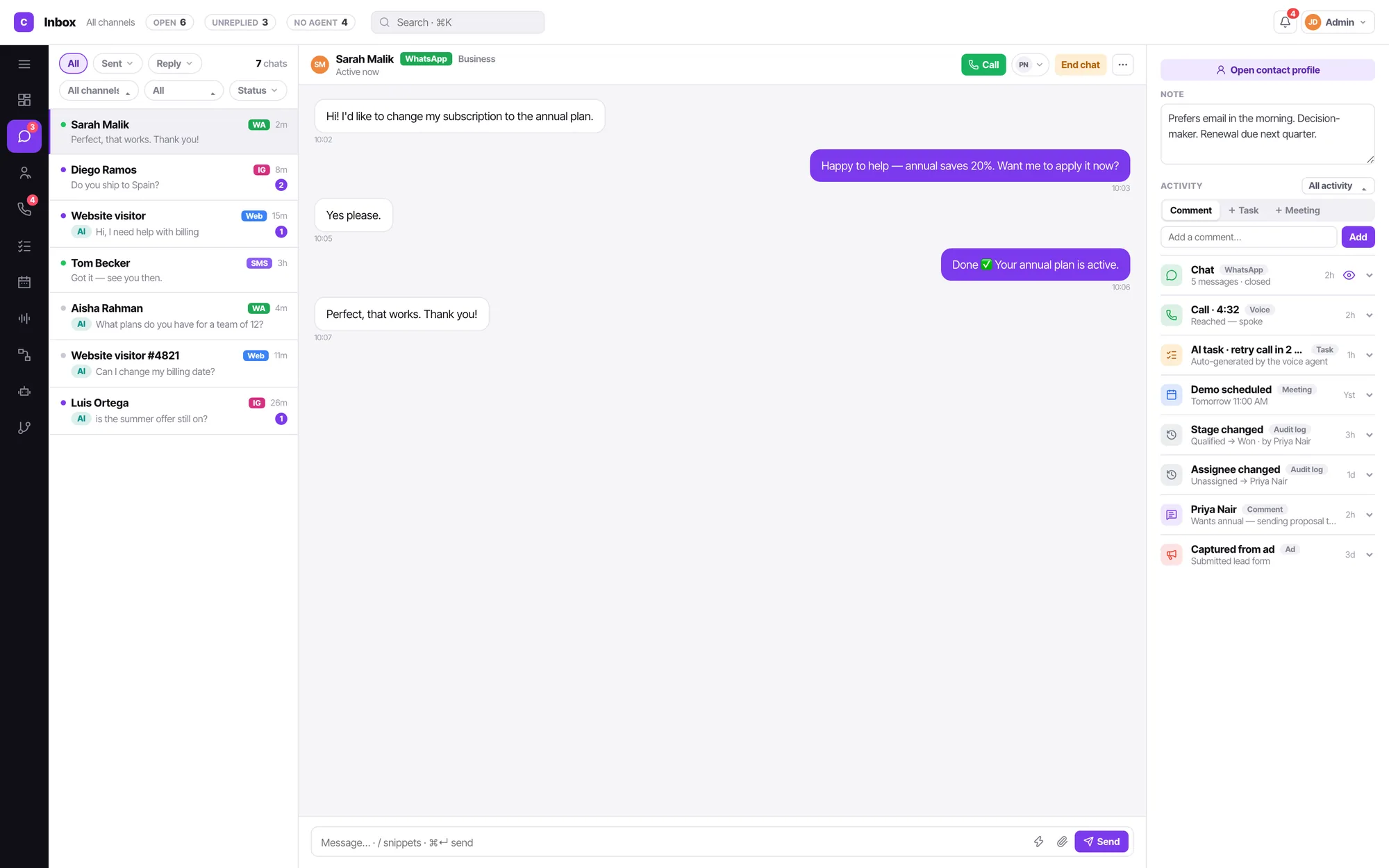
Adding a channel starts from an icon grid of all thirteen types, not a form. Picking one creates the channel and opens its config pane immediately — there is no name-entry modal.
Connect the shared mailbox
This is the team address — support@, sales@, hello@.
Choose what answers
An AI bot, or your agents.
Keep your own mailbox separate
Your personal 1:1 mailbox and signature live under Account → Email, not here.
Not every channel needs every control
Chat channels get do-not-create-contact, auto-close and a bot routing choice. They do not get call timings, because a chat has no calling hours.
- A shared mailbox that is genuinely shared
- Threads carry the same sent / replied / unreplied facets as chat
- Two email syncs per user on every plan
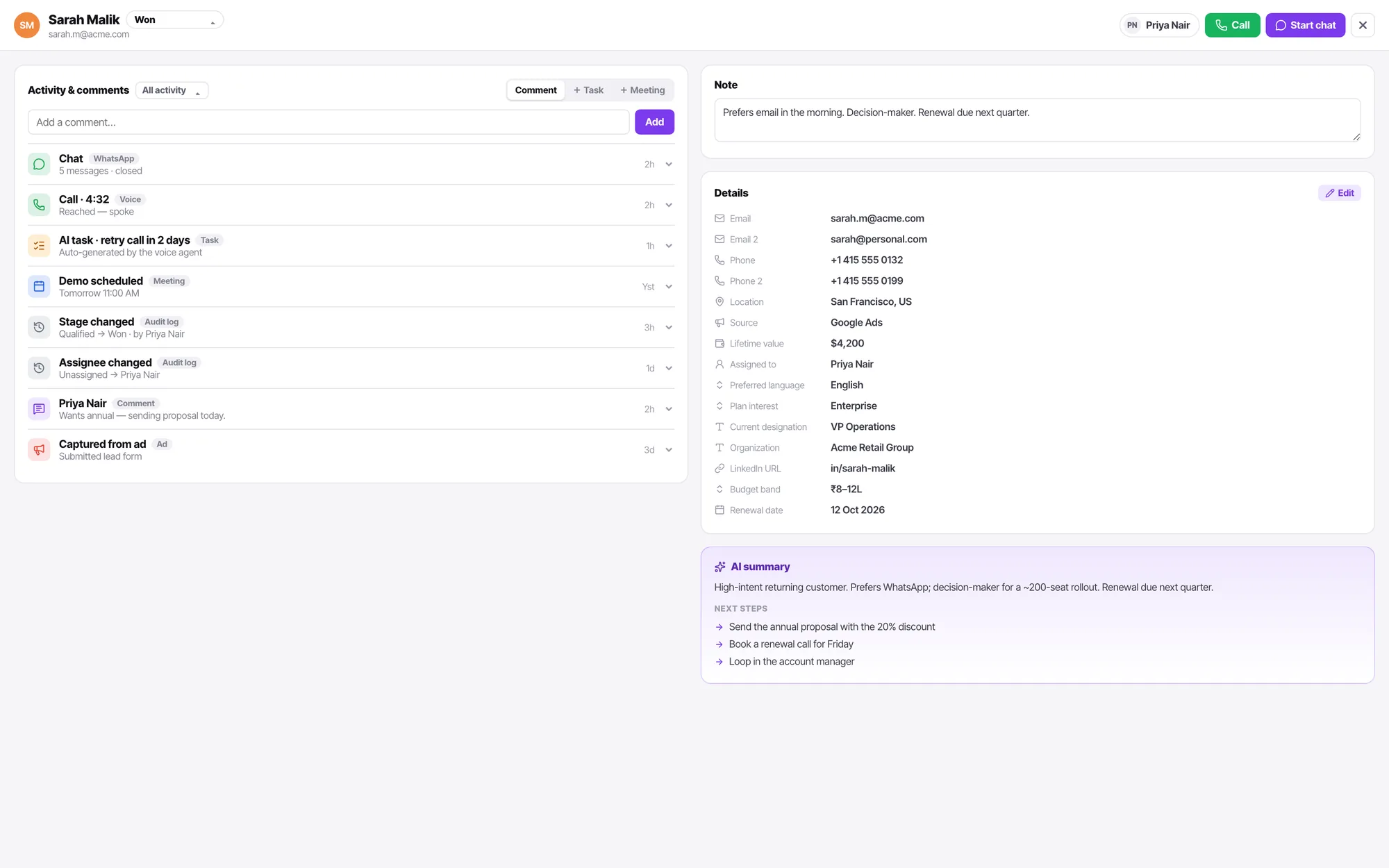
A channel answers with exactly one thing
An AI bot, or a call flow. Never both, never neither. It is the only reason you can ever say for certain what picked up.
Email FAQ
What is the difference between an Email channel and my own mailbox?
An Email channel is a shared inbox routed to your team or a bot. Account → Email is your own mailbox and signature, for 1:1 emails you send to contacts. They are deliberately not merged, and the product says so.
How many channels do I get?
Three on Starter, four on Growth, seven on Scale and twelve on Enterprise — of any type. Compare the plans.
Who can connect or disconnect a channel?
An admin. Connecting a line means credentials, a carrier account and a bill. A manager keeps everything operational — routing, calling hours, additional settings, enable and disable, and the health readout — but the credential fields and the connected-account row are admin-only, and the product says so rather than hiding it.